
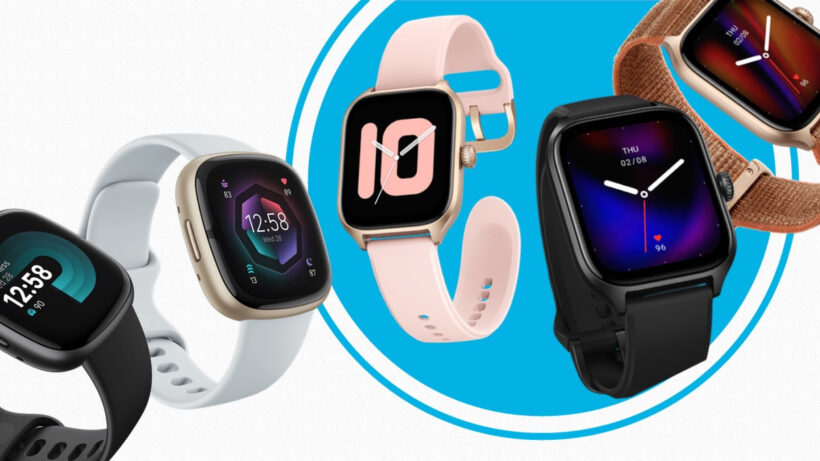
We help you choose between these two wearable giants
While Fitbit is the king of fitness tracking (and a big smartwatch player), Amazfit has emerged as a capable challenger with a very strong presence globally.
Amazfit is owned by Zepp Health, formerly Huami, which manufactures Xiaomi’s devices—including the eponymous Mi Band series. While Amazfit may be less recognizable than Fitbit in some markets, it’s a serious player in the fitness tracking space.
But this is no knock-off technology. Amazfit devices pack a lot of the same features as Fitbit for tracking fitness, sleep, and overall wellness trends—often for less money than its more established rival.
But how do the two platforms compare, and is one better than the other? We’ve spent a fair amount of time with devices made by both, getting to know their strengths and weaknesses.
We break down how Fitbit and Amazfit compare as ecosystems to help you decide which is the best fit for you.
| Spec | Fitbit | Amazfit |
|---|---|---|
| Price range | $80–$250 | $80–$400 |
| Max battery life | Up to 11 days | Up to 27 days |
| Best for | Health-focused tracking with great integration with the Google ecosystem | Workouts and activities tracking |
| Official website | Visit Fitbit | Visit Amazfit |
Also check out our best smartwatch and best fitness tracker buying guides, based on our reviews.
Amazfit or Fitbit: The hardware
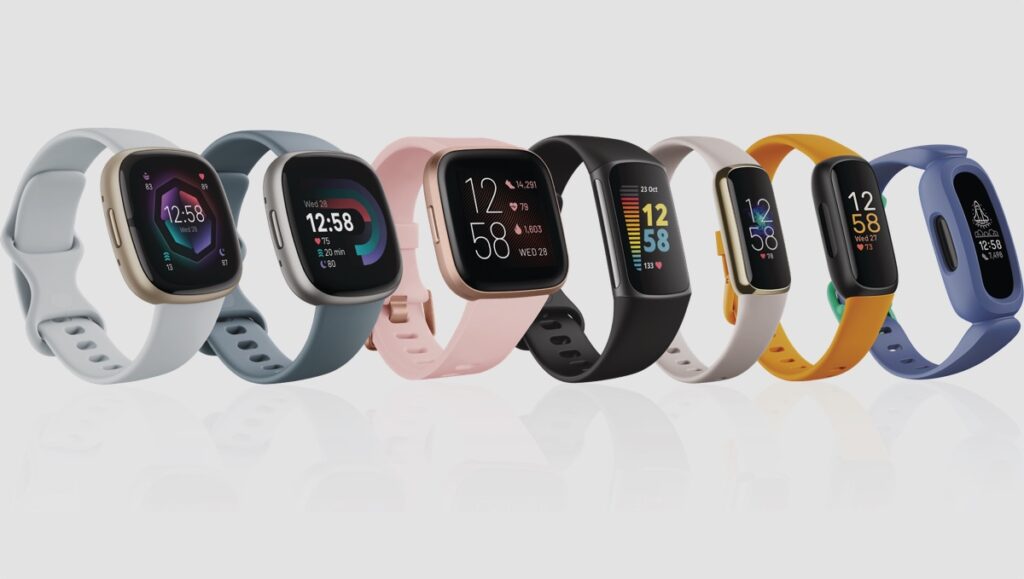
As mentioned above, Fitbit sells fitness trackers and smartwatches at different price points and with different feature sets.
The Fitbit family includes fitness trackers such as the Inspire 3, Fitbit Charge 5, and newer Fitbit Air. Then there are the two smartwatches: Versa 4 and Sense 2 health watch.
- Read our list of the best Fitbit models in 2026
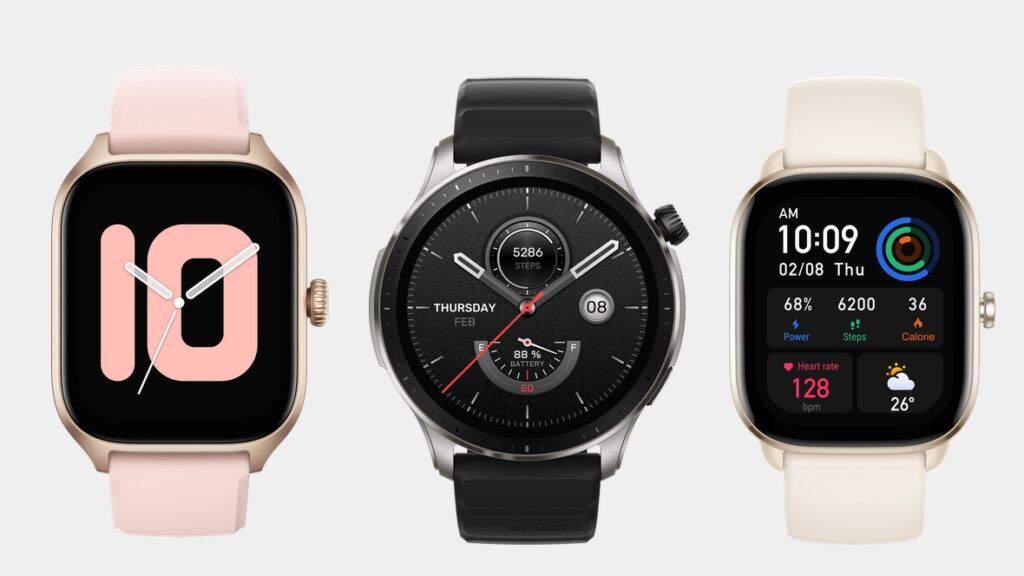
The Amazfit family of devices is bigger. There’s the Amazfit GTS 4 and GTR 4 combo (pictured above), which are round and square versions of its flagship smartwatch.
Then there’s the Bip 3 Pro—its budget smartwatch. Add to that the Amazfit Active 3 Premium, which can rival Garmin and even the latest release of the Balance Ultra model, which is a hybrid smartwatch with almost a month-long battery life.
Amazfit GTS/GTR 4 vs. Fitbit Versa 4
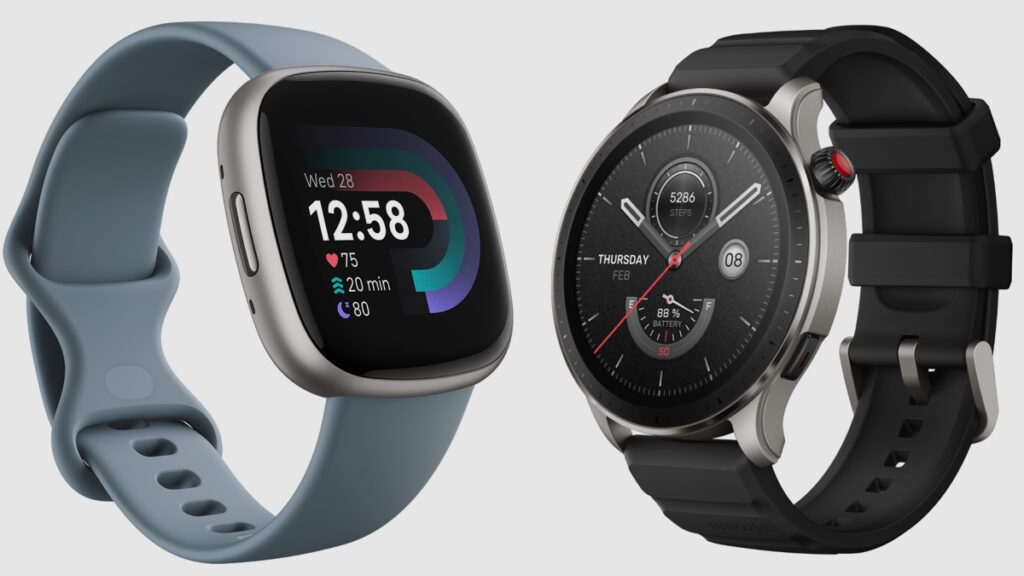
Amazfit and Fitbit both have strong smartwatch lineups, and it’s a tough call. Like, when comparing the older Fitbit Versa 4 vs. Amazfit GTS 4 (and rounded-faced GTR 4), choosing the better one is a challenge.
The Amazfit GTR/GTS 4 comes in round and square options. They’re not identical, and the square version offers a tad more battery life. The GTR 4 is a bit bigger and looks bulky, while the GTS 4 is slimmer. But pretty much everything that applies to the GTR 4 can be found on the GTS.
The Amazfit pair offers an overhauled heart rate sensor array on board, multiband GPS, 150+ workout modes, and intelligent detection of workouts, including gym repetitions.
Outdoor workouts have also been treated to extra biometric analysis via PeakBeats, running tracking, and mapping and routing. Amazfit has always excelled as a fitness smartwatch experience, and the company has doubled down with the GTS4/GTS4.
The Fitbit Versa 4 is a modest upgrade on its predecessor but matches closely with the GTR/S 4 model. There’s GPS on board for run tracking, although it’s aimed at a casual crowd, so there’s no multiband GPS and little in the way of post-run biometric and performance analysis.
However, in our tests, the Health Metrics dashboard, which keeps tabs on your body’s heart rate and temperature baselines, is solid. While Amazfit sleep tracking is better than your average smartwatch, Fitbit is the best in the business, with rather accurate assessments of sleep time.
Both the Amazfit GTS/GTR 4 watches and the Fitbit Versa 2 are very middle-of-the-road smartwatches in terms of extras, with no apps, modest third-party integrations, and poor watch face selections.
Both boast Alexa and excellent battery life, with around a week between charges with heavy use.
Winner: Draw
Amazfit Band 7 vs. Fitbit Charge 5
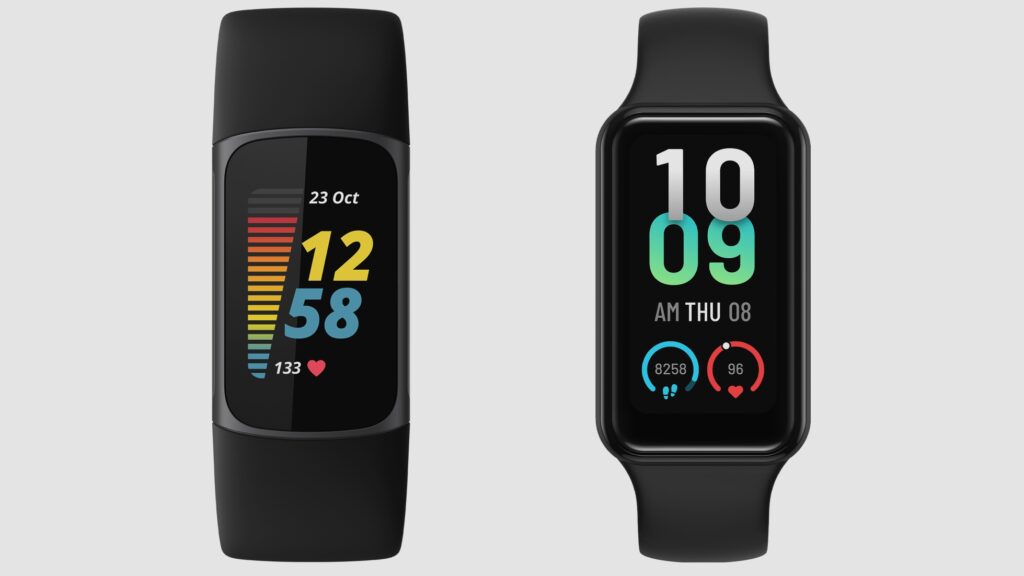
The Amazfit Band 7 is a supercharged fitness tracker/smartwatch hybrid, which packs fitness features into a band form. It has a huge 1.47-inch full-color touchscreen AMOLED display and a sporty silicone band.
It tracks 120+ workout types, boasts automatic workout detection, and uses the advanced fitness analytics found on the flagship GTR/S 4 smartwatch. But it doesn’t have GPS built in, so you will have to piggyback off your smartphone. It’s good for a dip in the pool, with 5ATM water resistance.
There’s support for SpO2 readings to take blood oxygen measurements, stress tracking features, and connected GPS to track outdoor activities with help from your phone.
The Charge 5 is a much more advanced fitness tracker. It has ECG capabilities and an EDA sensor that may keep tabs on stress trends specifically and can also be used for mindfulness sessions.
It also has built-in GPS, though we did find accuracy issues during our review period.
Again, there’s little in the way of workout analysis. But Amazfit and Fitbit can sync workouts to Strava. Health and sleep tracking are better presented on Fitbit, and the Health Metrics dashboard is better than anything Amazfit has yet to offer.
Winner: Fitbit
Also consider…
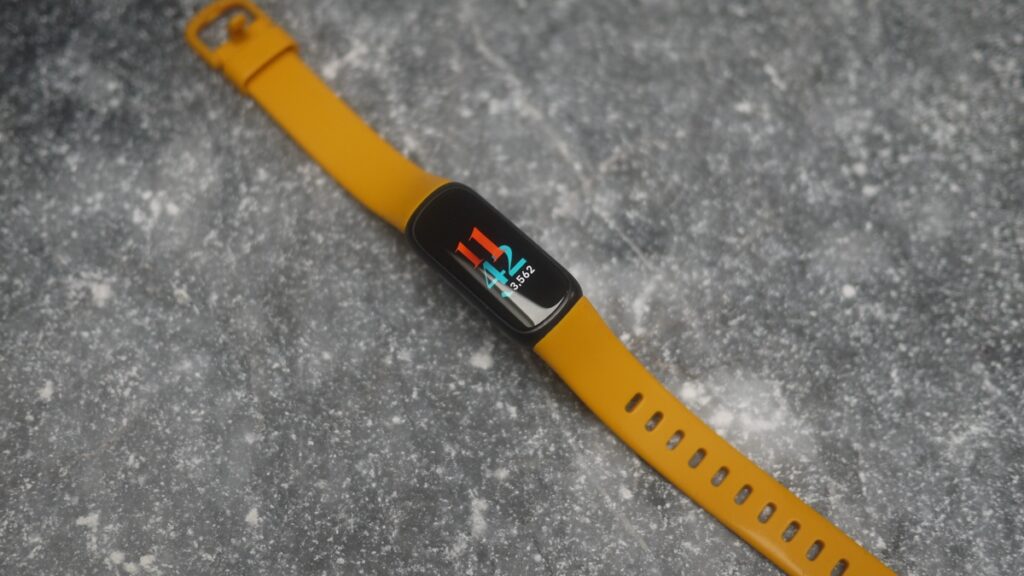
The Fitbit Inspire 3 is incredibly popular as an entry-level fitness tracker. It’s been overhauled to have a color screen, SpO2, and temperature sensor, which means it offers access to the full Fitbit experience. We also feel that plenty of people will love the minimal design and funky colors.
Perhaps the closest Amazfit is the Bip 3 (and Bip 3 Pro). The budget smartwatch features decent heart rate and sleep trend tracking, and the Pro version has GPS. It’s no-frills, the screen is a lower-quality LCD, and the plastic case is boxy. But as budget smartwatches go, it’s one of the best around.
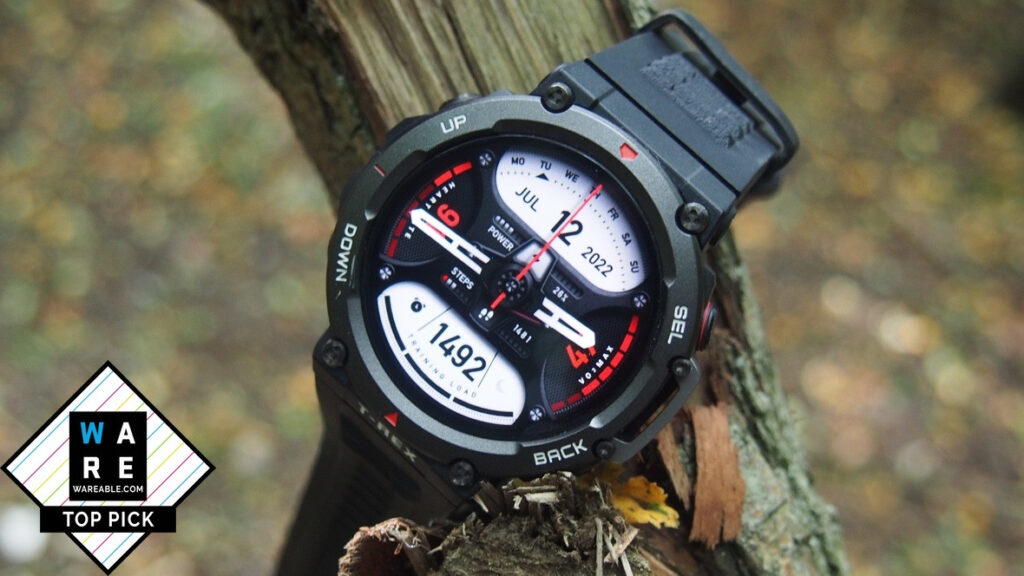
The Amazfit T-Rex 2 is also a good pick for anyone considering a Garmin alternative. The GPS can’t be outmatched with any Fibit model, and is a rugged beast, with 10ATM water resistance, navigation support, and monster multi-band GPS battery life.
Amazfit or Fitbit: The apps
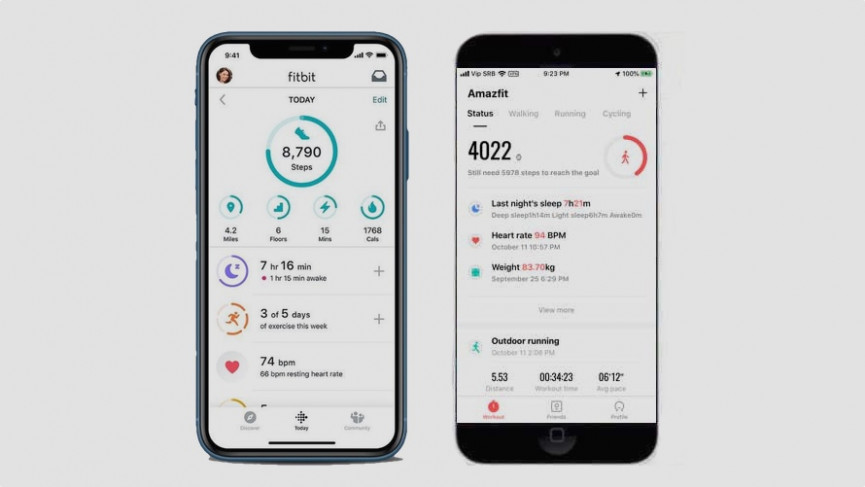
It’s fair to say that on the hardware front, both Amazfit and Fitbit do great jobs in terms of offering well-built, feature-rich devices that look like wearables you’d want to wear.
Looking good and being suitable for the gym is just one piece of the puzzle, though. The software that puts that hardware to good use is equally as important and may ultimately sway your decision to choose between the two platforms.
Fitbit app in-depth
Fitbit’s companion app is available for smartphones only, as the web dashboard was removed back in 2024. Though, for most, that’s not a big loss, as you’re more likely to use your phone app for interactions.
Now called Google Health, Fitbit still prides itself on designing an app that’s easy to use, and that’s exactly what you get.
See a snapshot of your day’s fitness tracking, discover new programs, and try new challenges to add to your routine. It’s a clutter-free app, making it easy to find the data you care about most.
Fitbit sleep tracking
Fitbit offers a Google Health Premium subscription service, giving you additional features like wellness reports, audio and video workouts, richer sleep insights, and AI-driven modes like Ask Coach. Though, you will have to pay for the pleasure of getting access to those features.
The Fitbit app also works with a range of third-party apps, including Strava, to offer alternative ways to track fitness and diet outside of Fitbit’s built-in features.
Zepp app in-depth
The Zepp app is the official name for the Amazfit ecosystem, confusingly. But it acts as a place to keep a close eye on your wellness and fitness data. It’s also a place to manually track activities like walking, running, and cycling.
You can download mini apps from the Zepp app store, as in 2026, the library has been significantly expanded, and you can download a watch face, but support varies by device. You can see daily heart rate trends, a breakdown of sleep, and fitness trends like VO2 Max and Training Load insights if you care about recovering from workouts and optimizing fitness levels.
Some Amazfit devices also use the PAI score, which was developed by wearable tech company Mio. It’s a single health score derived from heart rate and is designed to make sure you’re working that heart regularly. There’s also Zepp Aura—an AI-powered feature for sleep quality support.
Since the Fitbit app converted to Google Health, it has significantly reduced its functionality and convenience, while the Zepp app has continuously improved.
Currently, the Zepp app is superior to Google Health, though we hope to see them balancing out in the near future.
Winner: Amazfit
Fitness tracking compared
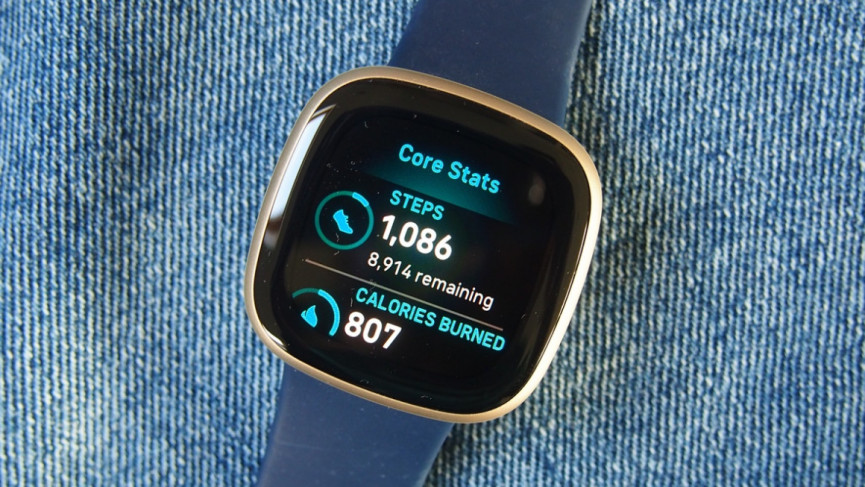
All of Fitbit’s and Amazfit’s wearables offer basic tracking, which includes monitoring daily step counts and sleep tracking. Depending on your device, you may find additional features like tracking elevation to offer richer insights.
Fitness tracking
At their core, both platforms offer the ability to view steps, distance covered, and periods of inactivity. These are based on similar motion sensor setups and unique software algorithms to convert wrist movement to motion data. No two devices ever deliver identical data, but the devices we’ve tested across both platforms didn’t throw out wildly inaccurate data.
Heart health
Both platforms offer heart rate-based trend insights based on optical, light-based sensors. The Fitbit Sense 2, Fitbit Charge 5, and Fitbit Charge 6 also offer ECG sensors, which might detect irregular heart rhythms, similar to FDA-cleared features on Apple Watches.
However, the results of these features should not be taken as medical advice, and you should talk to your physician if you have any concerns.
Fitbit has also gone further and rolled out continuous monitoring of heart rate rhythms, via the PPG sensor, across its full range.
Both claim their respective heart rate sensor technologies may help detect signs associated with heart disorders like atrial fibrillation. Fitbit and Amazfit also offer richer sleep insights using that heart rate data. We’d say Fitbit does a better job of it, though.
While Fitbit does offer heart rate-based exercise tracking, Amazfit does push more into the sporting realms with its Training Load, VO2 Max, and PAI Health scores.
Sleep
From a presentation standpoint, Fitbit has the edge here. It neatly and simply presents the components of your sleep in a way that most should be able to understand. Whether that’s sleep stages or additional sleep scores available via Google Health Premium.
Amazfit certainly doesn’t shirk its responsibilities as far as offering sleep breakdowns and sleep quality analysis—and you still get that single-number sleep score. The latest algorithm update has significantly improved accuracy, but Fitbit is still just a bit ahead in the data and accuracy—and that does shine through.
Stress and recovery
Fitbit has always been in the lead in mental wellness support with guided breathing and EDA stress sensing (available on Sense 2, Charge 5, and Charge 6). As of this year, mood logging has also been added to track your mental well-being.
However, Amazfit has narrowed the gap with Zepp Aura features and built-in breathing exercises on newer models. The key difference is that Fitbit’s EDA sensor is more suited for direct stress tracking than Amazfit’s heart rate variability.
Women’s health tracking
Both Fitbit and Amazfit newer models offer menstrual cycle tracking with fertility window predictions, notifications, and symptom logging.
There’s no one clear winner with this feature, as each platform now offers different approaches: Fitbit focuses on basic cycle insights in the app, while Amazfit takes it even further with Wild.AI. You get all the basic cycle-tracking aspects, as well as personalized workout and nutrition recommendations for each cycle phase.
Winner: Fitbit
Sports tracking compared
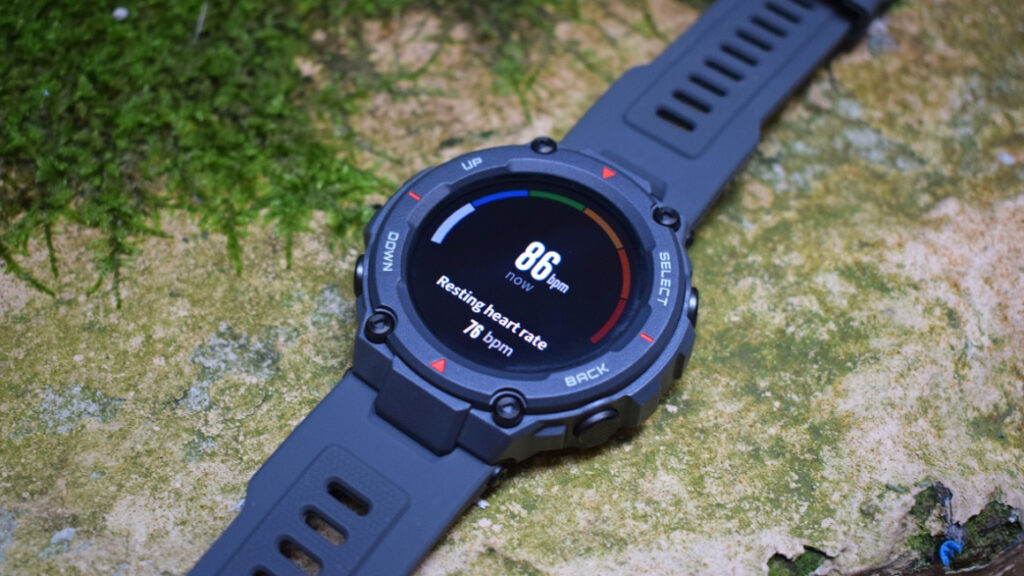
Both of these platforms are built with fitness and sports tracking at their core. If you want to take things beyond step tracking, these devices, across the board, are well equipped to do that.
There are certainly ones that perform better for more advanced sports tracking if that’s something you’re after.
GPS tracked workouts
Fitbit’s smartwatches and fitness trackers offer dedicated modes for the likes of running and cycling, and more basic workout modes. Those devices that are fit for the water only track activity in the pool. Where GPS isn’t available, it’ll use motion sensors to track metrics like distance, which is never going to be as reliable as GPS.
Outside of the Versa 4, Sense 2, Charge 5, and Charge 6, other models rely on your phone’s GPS.
Amazfit offers built-in GPS on pretty much all of its wearables. Whether that’s budget options like the Amazfit Bip S or you go for something like the GTS 2 or the more rugged T-Rex. There’s a wealth of sports modes on most of its watches, including outdoor activities like hiking, and you can get open-water swimming tracking where available. The data is reliable overall, but like Fitbit, it is more designed for casual fitness folk.
Besides, both platforms support Strava integration if you want to review data in a more familiar place.
Swimming
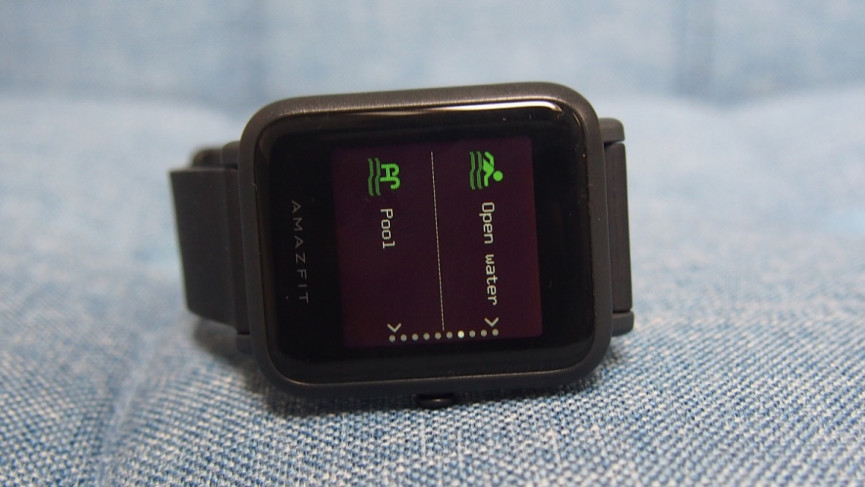
More Fitbit devices than ever are waterproof and designed to track swimming. As we’ve already mentioned, that’s pool swimming only. Fitbit’s smartwatches offer the nicest screens to review data in real-time, but accuracy in recent years has dropped, as we saw with the Charge 6 model.
Many of Amazfit’s devices offer both pool and open-water swimming, giving you similarly rich swim metrics, including SWOLF, pace, and stroke analysis. You’ve got nice, bright screens to review your swim data, and the accuracy is there too, which gives it the edge in this particular department.
Heart rate in workouts
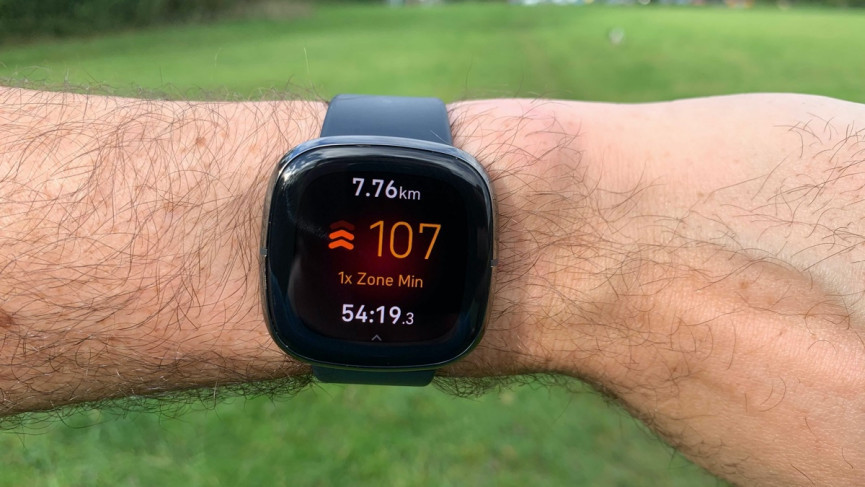
This is an interesting one. Of the Fitbit wearables that include a heart rate monitor, you can work in heart rate zones and view resting heart rate data to get a better gauge of your fitness level. You’ll also get something called a Cardio Fitness Score, which is related to VO2 Max as another source of insight into your fitness levels.
Amazfit also offers similar functionality during workouts and additional insights, such as VO2 Max, in its companion smartphone app. You will also get a rich level of detail as far as your HR data and how it’s presented in the Amazfit app.
From an accuracy perspective, we think it’s a bit of a mixed bag across both platforms. Fitbit’s newest devices, like the Charge 5, Charge 6, Sense 2, Versa 4, and Inspire 3, offer more reliable data based on our experience. But these devices have their moments of throwing up questionable data too.
Winner: Amazfit
Fitbit vs. Amazfit: Verdict
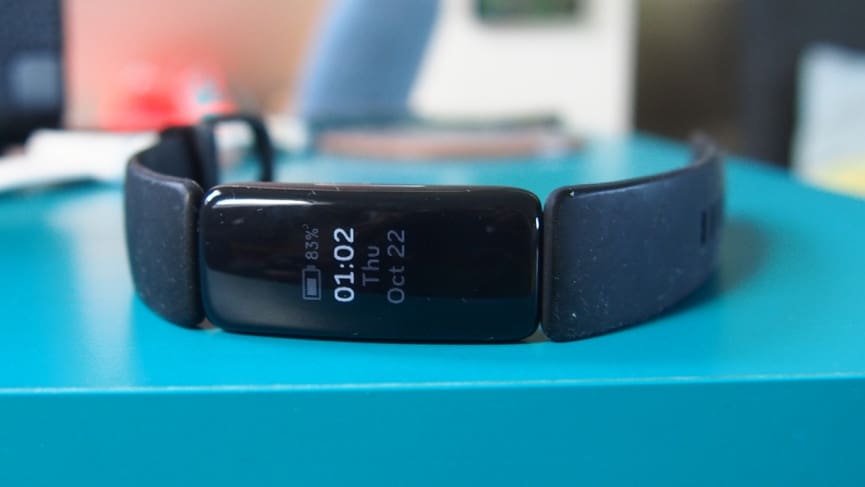
Why choose Fitbit?
You might want to choose Fitbit over Amazfit for the simple fact of a solid ecosystem. Fitbit excels in integrated Google services like Google Wallet or YouTube. It does the fitness tracking well and, compared to Amazfit, does a better job on the smartwatch front too. It’s got apps, payments, watch faces, and other improving features despite the recent struggles.
Its devices are really easy to use as well. It generally just works, and it’s most user-friendly for a wider range of ages. There are trackers for kids as well as people who want something a bit more capable in the smartwatch and fitness tracking department. It offers good sports tracking, though there’s room for improvement.
It excels as a platform for covering the bases. It’s not perfect, but what you get as a package is generally very reliable. Fitbit’s wearables look better than they ever have, and that makes them easier to recommend too. The Charge models are standout devices and available at a good price too.
Why choose Amazfit?
Don’t be put off by the fact that Amazfit has been on the scene for less time than Fitbit. It has already shown it can make really attractive, well-built wearables that offer big features for not a lot of money.
Stable improvements and quick reaction to customer comments are also great aspects of these smartwatches. You’re getting well-presented health and fitness data along with useful insights into that data.
Where Amazfit delivers, perhaps more so than Fitbit, is in activity tracking and pushing the boundaries of battery life. You get richer support for features beyond basic tracking.
If these are the kind of features you value, more so than making payments from your wearable, you’ll be better served here.