
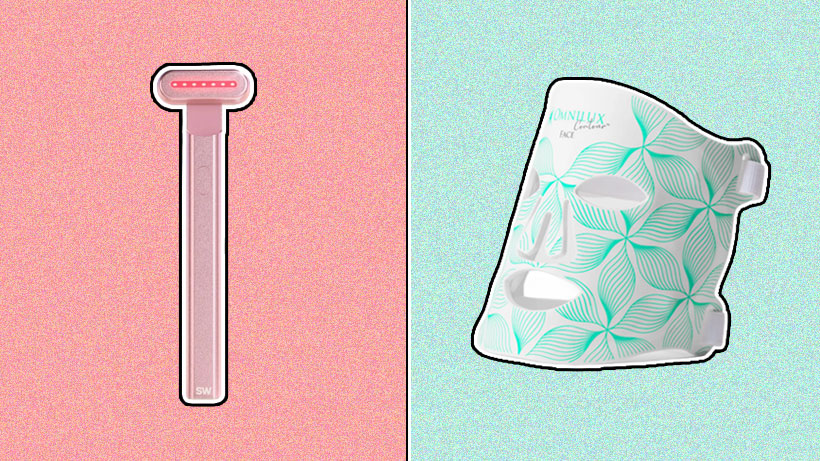
Solawave and Omnilux red light therapy devices both promise the same thing on paper: improved skin tone, texture, and signs of aging. In practice, though, they feel like very different products to live with. The real decision here isn’t just about features, but rather about convenience versus coverage and clinical power.
We’ve spent time testing both the Solawave wand and the Omnilux mask as part of real routines, and we’ve noticed the differences almost immediately. Solawave is the kind of device you pick up for quick, targeted sessions. It’s compact, lightweight, and adds extras like microcurrent and warmth. However, it still feels more like a skincare tool than a dedicated treatment device. Meanwhile, Omnilux takes a more dermatologist-style approach, delivering full-face LED exposure in a single, hands-free session with clinically tested wavelengths.
We got some results with both, but the experience and the outcome were not the same. We found Solawave easier to use casually, while Omnilux’s full-face coverage made it better suited to structured routines where consistency drives more noticeable, long-term improvements.
| Specs | Omnilux Contour Face | Solawave Radiant Renewal Skincare Wand + LightBoost Set |
|---|---|---|
| Device type | Full-face flexible mask | Handheld wand |
| Price | $395 | $189 |
| Light wavelengths | 633nm red + 830nm near-infrared | 630nm red light |
| LED count | 132 LEDs | — |
| Treatment area | Entire face | Targeted/small areas |
| Session length | 10 min full face | ~5 min per area |
| Extra technologies | LED light only | Microcurrent, warmth, vibration massage |
| Portability | Less portable | Very portable/travel-friendly |
| FDA clearance | Yes | Yes |
| Best for | Deeper anti-aging & collagen support | Puffiness, quick glow, fine lines |
| Official website | Visit Omnilux | Visit Solawave |
Price and value
Looking purely at the cost, these two red light therapy devices sit in very different categories. Solawave is firmly in the budget range, typically priced at ~$150-$250, while Omnilux masks are in the higher end of mid-range, starting at ~$350 and sometimes exceeding ~$450, depending on the model.
What you get for the price
With Solawave, you’re paying for beginner-friendly use and versatility. We liked that this compact wand combines red light therapy with microcurrent, warmth, and low-intensity face massage, so you’re actually getting more for your money than just RLT. Plus, with Solawave, there are no major ongoing costs, as using serums or gels is completely optional. Overall, we placed the Solawave wand as a low-risk entry-point device.
On the other hand, Omnilux felt like a more specialized investment. With it, you’re paying for full-face LED coverage and a more dermatologist-style treatment with clinically studied wavelengths. However, we found out that RLT masks actually have a lifespan. Omnilux offers a 2-year warranty on its products, but the masks usually last 3 to 5 years, depending on how often you use them and how well you store them. Overall, this means that eventual replacement will be a part of the long-term cost.
Is Omnilux worth the premium?
The long and short of it is yes, Omnilux justifies its premium price if you’re looking to address skin concerns like signs of aging. That said, Solawave still delivers enough power to make the experience worthwhile without the upfront commitment, especially if you’re testing red light therapy for the first time.
Winner: Solawave
Design, comfort, and usability
Comparing the usability of Solawave and Omnilux is like comparing apples and oranges, as both devices approach it from completely opposite directions. And from our experience, usability is the key factor in how often you’ll actually use your RLT device.
Which is easier to use consistently
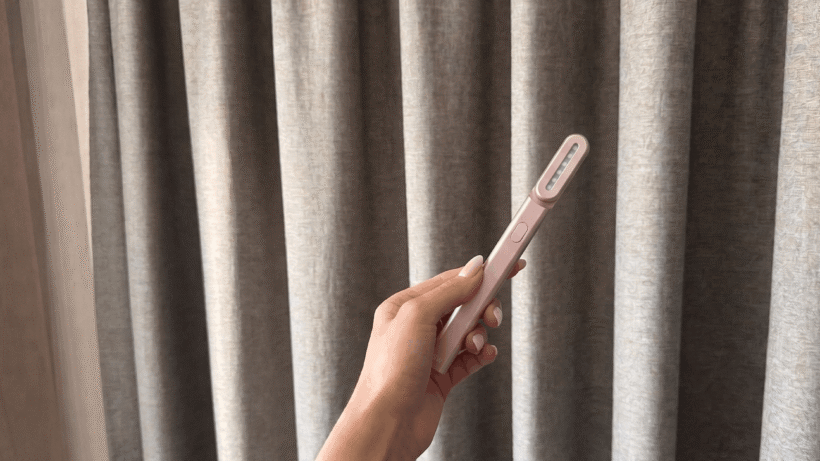
Solawave is a lightweight, highly portable, and easy-to-store RLT wand. However, the main caveat of this is that it requires active use. You have to move the wand across your face, area by area, which can feel like a chore over time if your spare time budget is running low. Plus, having to do that for at least 3–5 minutes per area might become quite tedious if you want to treat the whole face.
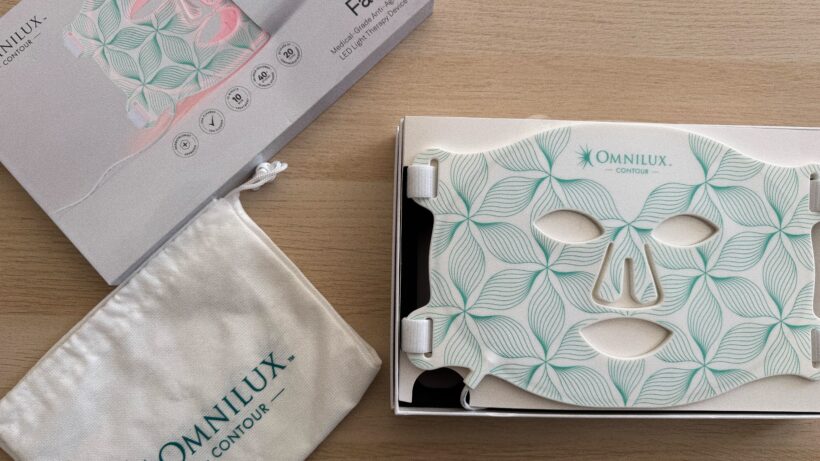
Omnilux flips that entirely. You only need to put the mask on, press a button, and let it run while you watch a show, relax, or work at a desk. Yes, at the same time, Omnilux is bulkier and less travel-friendly, but it removes any serious friction from the routine.
Comfort during sessions
We found that the Omnilux is hands-down the more comfortable option for longer sessions, simply because it’s a passive, low-effort process. It was much easier to maintain consistency with it, and consistency is what matters most for red light therapy effects.
Meanwhile, Solawave demands attention throughout the sessions, and that might be a drawback for people who do not have the spare time for dedicated sessions. And, if you lose consistency, the results from RLT might be slightly disappointing.
Winner: Omnilux
Technology and effectiveness
While the core technology in these two devices—red light therapy — is the same, the way the light is distributed and the power at which it operates matter a lot. We’ve thoroughly compared Solawave and Omnilux’s technology and effectiveness, and found that the devices are no equals in this area, with Omnilux taking a clear edge over Solawave.
Light wavelengths and skin penetration
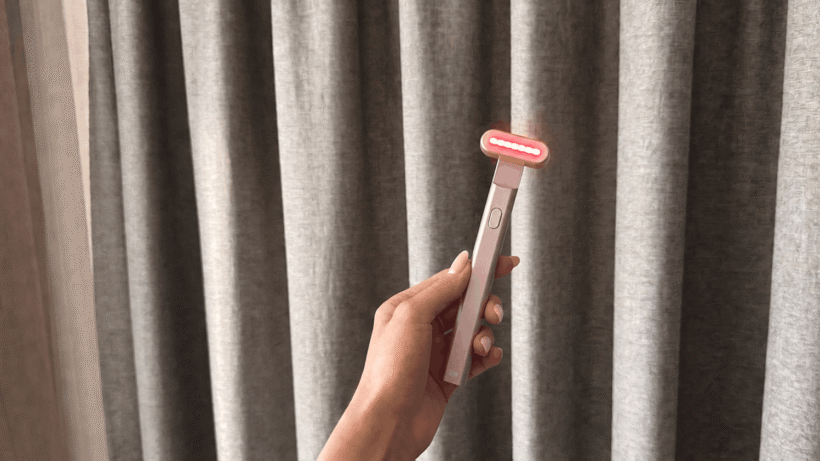
Solawave uses lower-power red-light LEDs in the 630nm range, and it adds microcurrent and heat. We found that this combination may support circulation and temporarily plump the skin. However, the light itself is relatively mild, so your results might take a while to become noticeable and may not be as obvious.
The Omnilux masks use clinically supported wavelengths, combining red light at 633nm and near-infrared at 830nm. Because Omnilux uses both red and near-infrared light, the combination may penetrate deeper into the skin, potentially improving collagen production and tissue repair more quickly and noticeably.
Coverage and treatment depth
From what we found, coverage is probably the biggest difference between Solawave and Omnilux. Solawave can only treat a small area at a time, which means you will need more time if you want to treat the whole face.
Meanwhile, Omnilux can easily deliver a full-face exposure in a single session, thanks to its mask-style design. This kind of consistency is hugely important if you’re targeting overall skin tone, aging signs, and elasticity.
Clinical evidence and FDA clearance
Omnilux is an FDA-cleared device that, as we found, falls within the clinically validated category. Based on our results, we found it to be a powerful device that may be beneficial for signs of aging.
Solawave also has FDA clearance, but primarily for safety, not for clinical results. However, the wand’s positioning is more in the cosmetic and wellness fields than in clinic-level treatment.
Do Solawave’s extra features matter?
From what we saw, the Solawand’s extra features—microcurrent, heat, and massage—can enhance the overall experience, and we did find they provided short-term benefits, such as reduced puffiness and a slightly improved skin feel. However, these superficial improvements don’t replace the stronger effects you may expect from using high-power LED therapy or visiting a dermatologist.
To sum it up, although Solawave offers more features, the Omnilux RLT mask may potentially deliver more meaningful therapy results.
Winner: Omnilux (effectiveness)
Treatment time and ease of use
We’ve been testing and reviewing red light therapy devices for a while now, and we’ve noticed that a structured approach and consistent use play a much larger role than you’d expect. So, treatment time and ease of use can be factors that tip you toward one device or the other.
As for Solawave’s session times, they are typically only around 3–5 minutes per area. However, if you want to treat the entire face, the minutes add up quickly. So, while the wand offers greater flexibility for targeted use, it also requires quite a bit of effort.
Our sessions with Omnilux lasted 10–20 minutes and covered the entire face in one go. Most importantly, though, the sessions are completely hands-free, so you can put the Omnilux mask on and go about your usual routine.
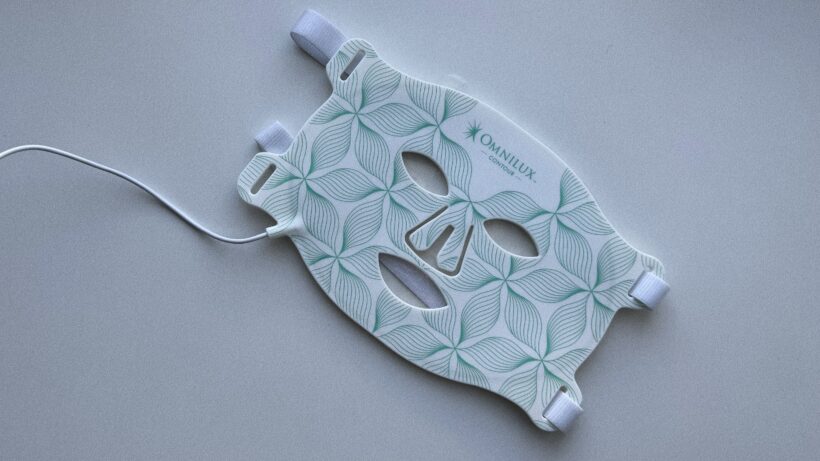
Overall, we found it easier to stick to a routine that does not require a hands-on approach every day, which makes the Omnilux a clear winner in this case, despite its longer session times compared to Solawave.
Winner: Omnilux
Results and user experience
After testing both devices, we saw results with both, but you need to set realistic expectations before you start using RLT devices and measure how willing you are to stick to a consistent routine. As with any RLT at-home treatment, patience is key, and results don’t come overnight.
How long before you see results
While we did see barely-there improvements as early as week 2 with both Solawave and Omnilux, they became most noticeable around week 4. By then, we noticed that fine wrinkles seemed less apparent and the skin tone more even. That said, for the full scope of results—noticeably better skin appearance and improvement in elasticity—we had to wait until week 8 (for some Wareable teammates, up to week 12).
So, no matter if you pick the Solawave or the Omnilux as your go-to device, remember that potential red light therapy benefits will be very gradual and subtle, rather than quick and dramatic.
Who gets the best results?
Because the Solawave works as a target area treatment, we noticed the better results when using the RLT wand for puffiness, circulation, and smaller areas like undereyes or fine lines.
However, if you want a full-face treatment, Omnilux offers a clear advantage. Thanks to its wide coverage and our consistent use, we noticed some improvements in skin elasticity, overall brightness, and slightly reduced visibility of fine lines.
That said, it doesn’t matter whether you choose Omnilux or Solawave if you only use it sporadically. Even a high-end device won’t deliver meaningful benefits without consistent use and proper, even coverage across the face.
Winner: Omnilux
Safety and side effects
Both the Solawave and the Omnilux are safe to use at home when used as directed. That is, you have to stick to the recommended session times (3–5 minutes per area with Solawave, and up to 20 minutes with Omnilux), and not overuse the devices.
However, because the Solawave has lower light intensity, it makes it more beginner-friendly. Using this RLT wand, we didn’t get any side effects, but if overdone, there might be a bit of heat buildup or mild redness.
Meanwhile, the Omnilux RLT mask uses significantly stronger light output. It is considered safe (after all, it’s an FDA-cleared device), but we’d recommend not skipping the eye protection when using this mask. Like most devices of this type, the Omnilux mask also includes a built-in safeguard, but you’ll still need to make sure you don’t overdo it.
Overall, both devices are suitable for most skin types. That said, if you have specific skin conditions, we recommend consulting a professional before starting at-home red light therapy.
Winner: Draw
Who should choose each?
In practice, choosing between Solawave and Omnilux depends on how much time, effort, and budget you’re willing to commit to red light therapy. One is built for quick, targeted use, while the other leans toward a structured full-face routine.
Choose Solawave if:
- You want a budget-friendly entry point
- You prefer quick, targeted treatments
- You travel often and need portability
- You like multi-function tools
Choose Omnilux if:
- You want full-face, consistent treatment
- You care about clinical backing
- You’re focused on anti-aging benefits
- You’re willing to invest more
In short, we recommend the Solawave for casual users and beginners, and the Omnilux for those looking for subtle, long-term skin improvements and not worried about the initial cost.
Verdict: Which is better overall?
Our final recommendation focused on convenience versus results. Solawave is quicker, more flexible, and easier to use on the go, while Omnilux is designed for more comprehensive, treatment-style routines with consistent use.
Overall winner: Omnilux
The reason for choosing Omnilux as our overall winner is simple: this red light therapy mask offers full-face coverage in a single session, uses clinically supported red and near-infrared wavelengths, and is easier to use consistently thanks to its hands-free design. We think this combination makes Omnilux easier to incorporate into routines and may provide better long-term effects. Especially if your concern is potential overall skin improvement.
With all that in mind, the Solawave red light therapy wand still makes perfect sense for beginners and budget-conscious users. Additionally, we think it would suit anyone who’d like their sessions to be quick and targeted, rather than full-face routines.
References
- IEEE Journal of Selected Topics in Quantum Electronics. Proposed Mechanisms of Photobiomodulation or Low-Level Light Therapy
- Journal of Clinical and Aesthetic Dermatology. Light-Emitting Diodes (LEDs) in Dermatology: A Review of Their Applications and Efficacy
- Photomedicine and Laser Surgery. A Controlled Trial to Determine the Efficacy of Red and Near-Infrared Light Treatment in Patient Satisfaction, Reduction of Fine Lines, Wrinkles, Skin Roughness, and Intradermal Collagen Density Increase
- Lasers in Surgery and Medicine. Skin Rejuvenation with Light-Emitting Diodes (LEDs): Clinical Evidence, Mechanisms, and Applications